
Home · For dentists
Implant surgery across San Diego County, done with you, not instead of you.
I work with general dentists, prosthodontists and surgeons in four ways: I bring the surgery to your office, you send the patient to Roya for the surgical phase, you refer the whole case, or I mentor you through the complex ones chairside. In every version you keep the patient, the restorative work and the relationship. This page explains how a case moves, step by step.
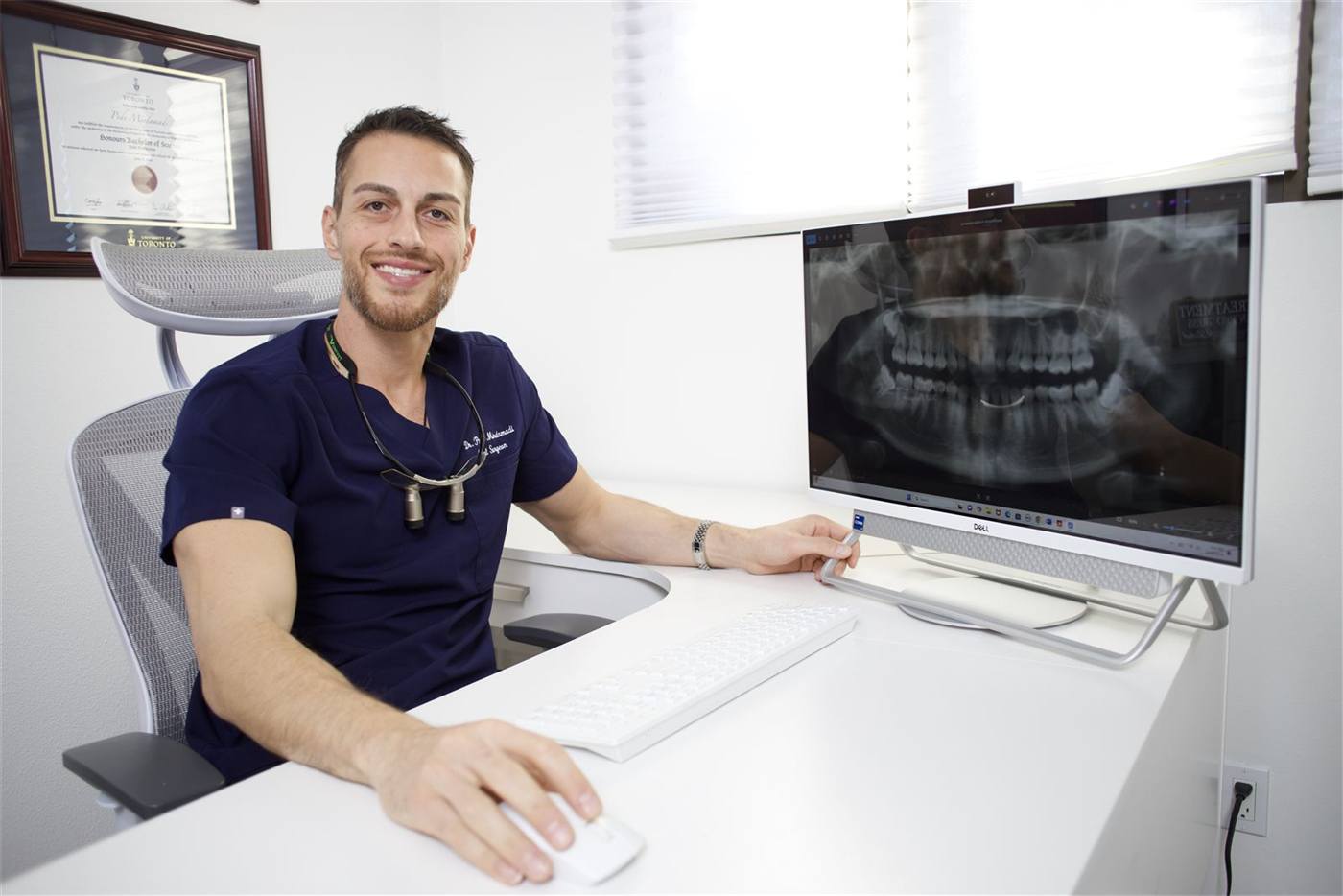
Four ways to work together
Pick the arrangement that suits the case and your office.
Surgery in your office
Mobile All-on-X. I bring the surgical team, instruments, implants and sedation to your operatory. Extractions, grafting and implant placement happen in one visit, and your patient never leaves the practice they know.
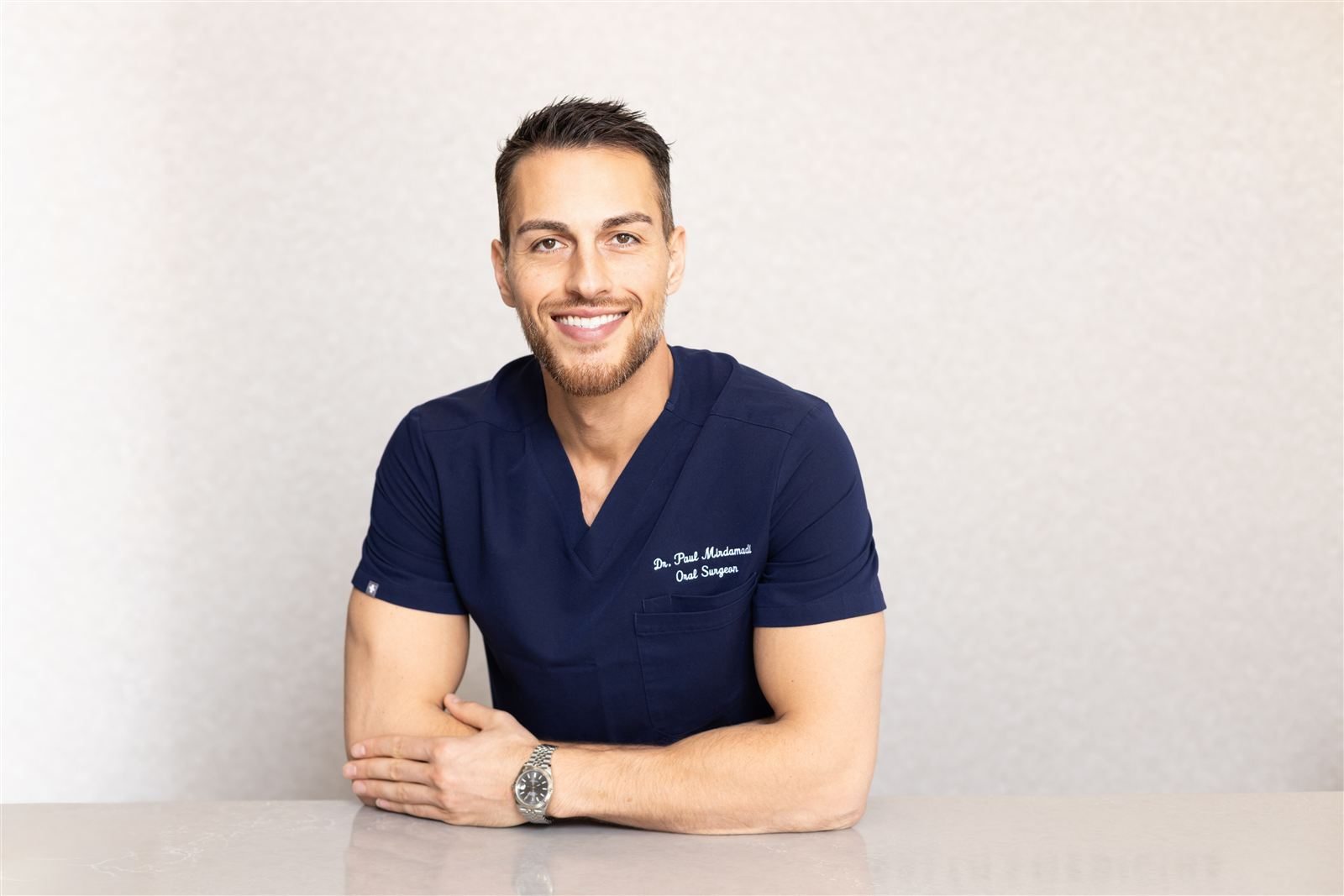
Surgery at Roya, restoration with you
You send the patient to Encinitas for the surgical phase. We plan the implant positions around your prosthetic design and the patient returns to you for the provisional and final teeth.
Surgery and provisional, final with you
I handle the surgery and the fixed provisional within 24 hours, in your office or at Roya, and the patient comes back to you once the implants have integrated for the final prosthesis.
Complex cases: done, or taught
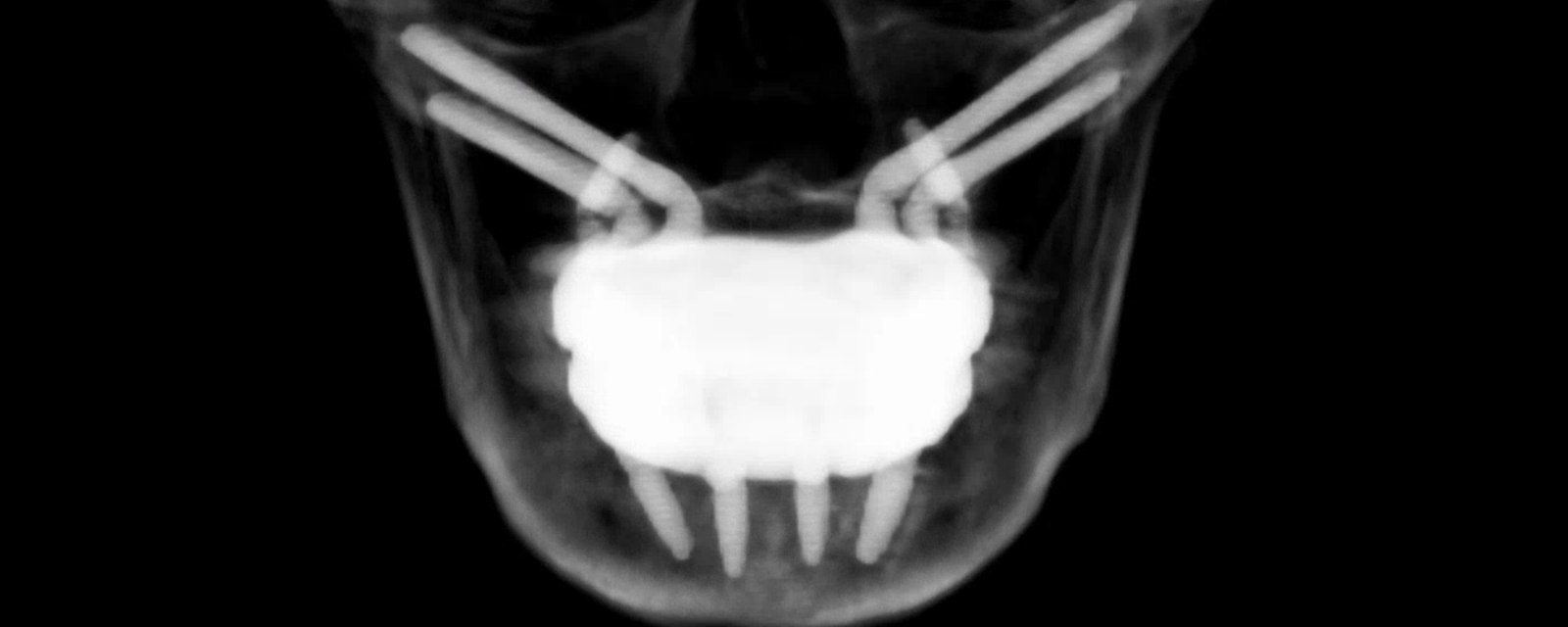
Zygomatic and pterygoid anchorage, failed implants, grafting, pathology and medically complex patients. I either come to your office and do the case, or I come and guide you through doing it yourself. See cases and how it works →
How a case moves
Seven steps from your first message to the final teeth.

1
Tell me about the case
Nine quick questions, about a minute, no patient identifiers: which arrangement you have in mind, the arch, what is in the mouth today, imaging you have, anesthesia, whether your office has hosted surgery before, the medical history in broad strokes, and your timeline. You see a short case summary straight away and I get the same summary.
2
A 20-minute planning call
I call you, usually within a few days. We look at the case together: what the patient needs, where the surgery should happen, who does which phase, and what has to be in hand before a date. Nothing is committed on that call; it is how we find out whether the case suits a shared approach.
3
Records, securely
After the call you receive a secure upload link for the CBCT DICOM, intraoral scan and photos. Please do not email them. If there is no CBCT yet, we take it at Roya or arrange an imaging center near you. I plan the implant positions digitally and, where it helps, design a surgical guide.
4
We agree the prosthetic design first
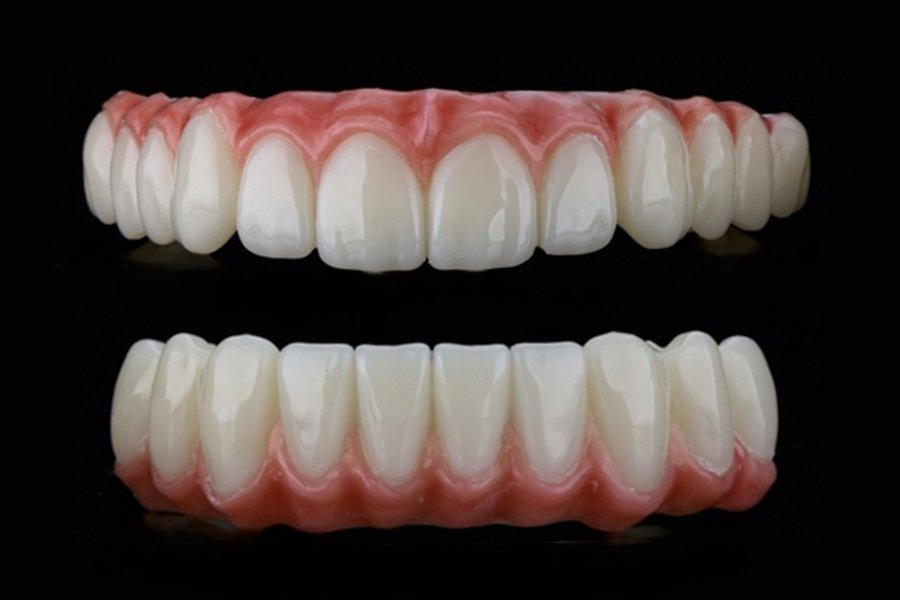
You own the restorative plan: tooth position, vertical dimension, material and the lab you want to use. I fit the surgery to that design, not the other way round. For full-arch cases we confirm the provisional with the lab before anything is scheduled.
5
Anesthesia and medical clearance
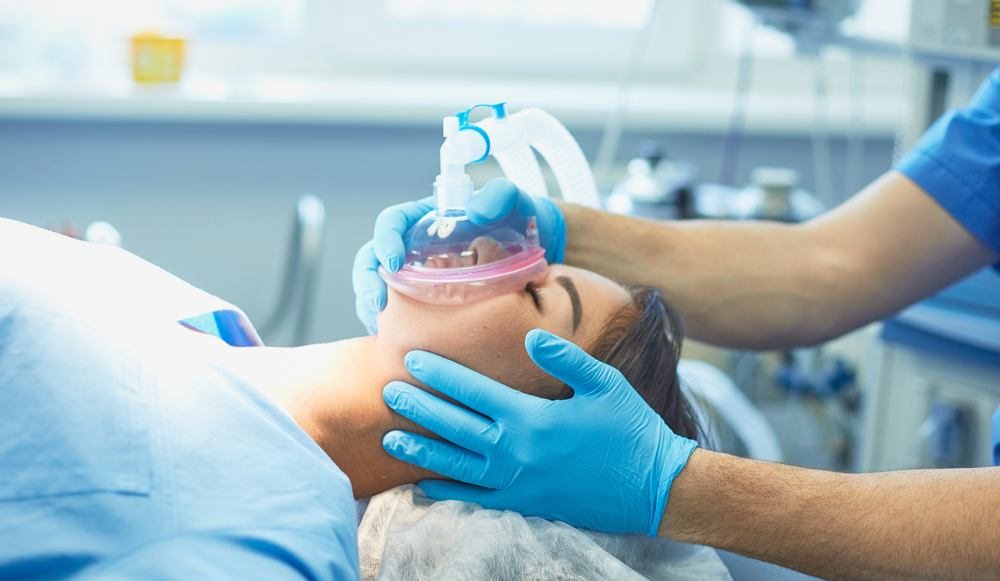
Who provides the anesthesia depends on the case and the medical history. For most office cases I provide the IV sedation myself and bring the monitoring and emergency equipment. A significant history may call for a dentist anesthesiologist or a hospital setting, and anticoagulants or antiresorptive medication may need a physician consult before a date is set. We decide this on the call, not on the day.
6
Surgery day
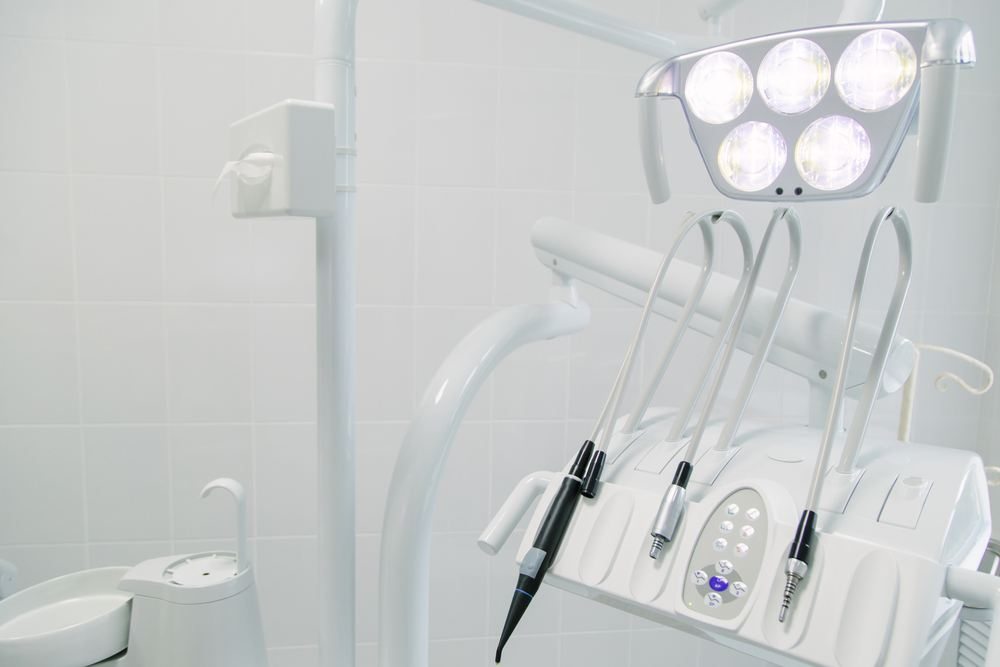
In your office: we arrive early, set up our cart and instruments, and your team follows a one-page checklist we send beforehand. The operatory needs working suction, oxygen, a recovery space and room for a second cart. Most general practices need very little changed. First-time surgical days are normal; before the first case we visit or video-call to look at the room and the sterilization flow. At Roya: your patient is looked after by my team and you receive a call when the surgery is done.

7
Same-day handoff and follow-up
You get the surgical report, implant details, post-operative scan and photos the same day. I see the patient for the surgical reviews, you take over for the provisional and final prosthesis, and we stay in touch until the case is finished. If anything in the healing changes the restorative plan, you hear it from me first.
Complex cases
The cases you would normally send away. I can do them in your office, or teach you to.
No bone for conventional implants, a failed implant, a sinus that sits on the ridge, a medical history that worries you: these are the patients who usually leave the practice. There are two ways I can keep them in yours.
1 · I operate
I come to your office and do the case.
I bring the plan, the surgical kit and the IV sedation, anchor the implants in the zygoma, the pterygoid plate or the nasal floor so no graft is needed, and your patient usually has a fixed provisional within 24 hours. They stay your patient and you keep the restorative work.
2 · I teach
I come to your office and you do the case, with me beside you.
For oral surgeons, periodontists and implant dentists who want zygomatic, pterygoid and full-arch cases in their own hands. We plan the case together on the CBCT, I scrub in next to you in your operatory and guide each step, and I stay available through the follow-ups. Your patient, your hands, my experience in the room.
Below are cases of this kind, shown on CBCT.
Before
After
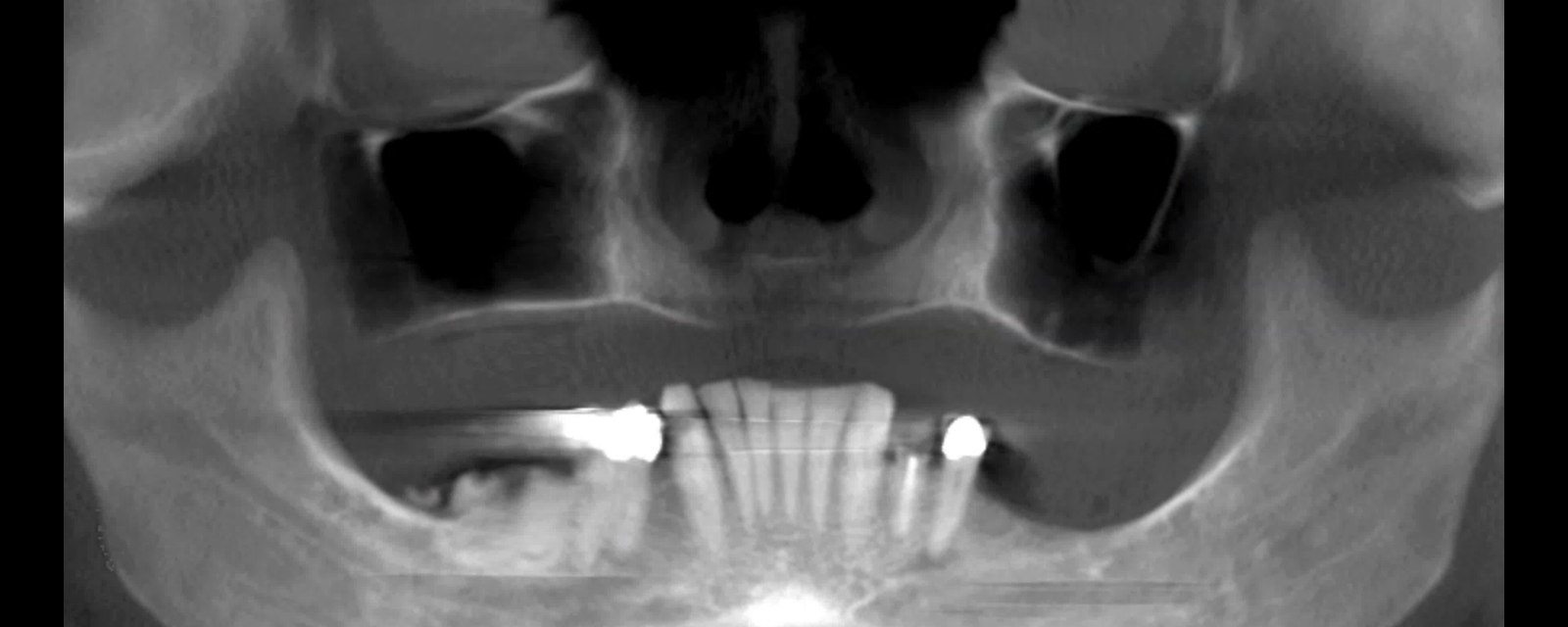
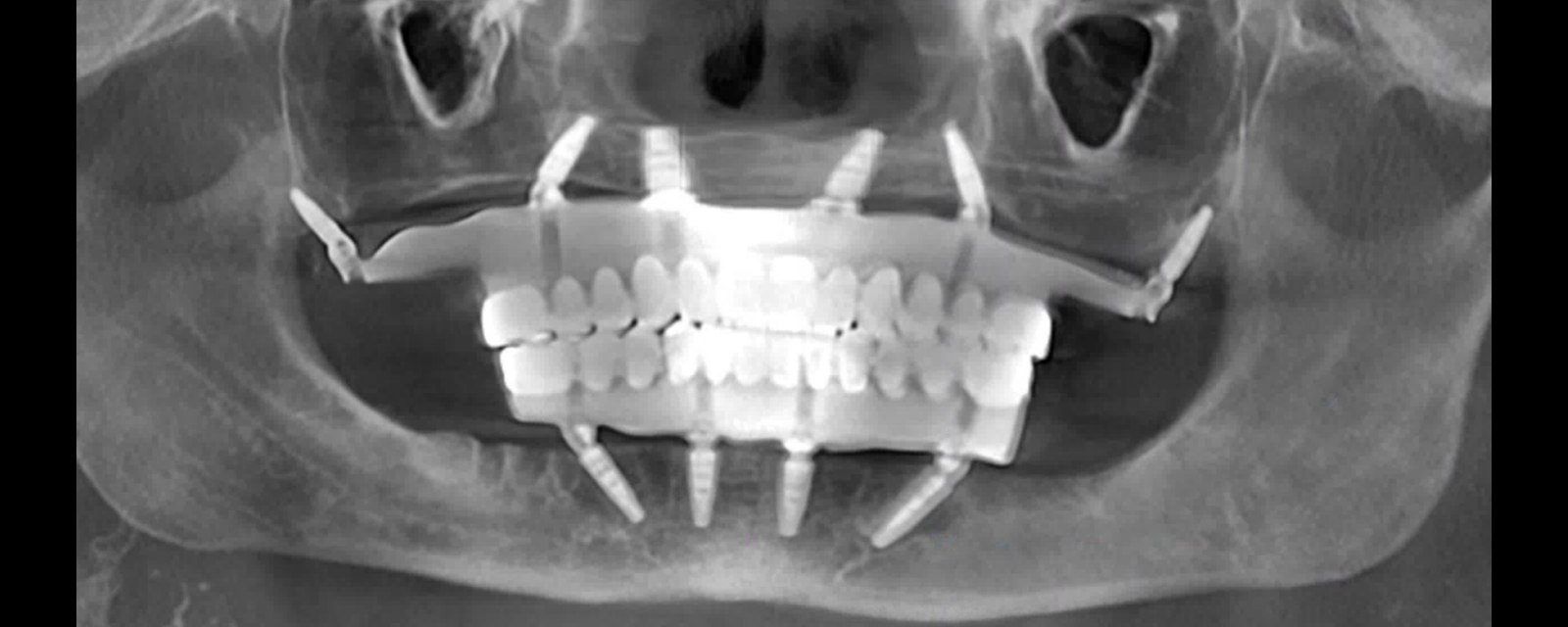
Pterygoid anchorage · both arches
Failing dentition, pneumatized sinuses
Posterior maxilla with almost no bone below the sinuses. Rather than bilateral sinus grafts and a year of waiting, the upper arch was anchored in the pterygoid plates and the anterior maxilla. Lower arch on four implants. Both arches fixed and loaded within 24 hours.
Before
After
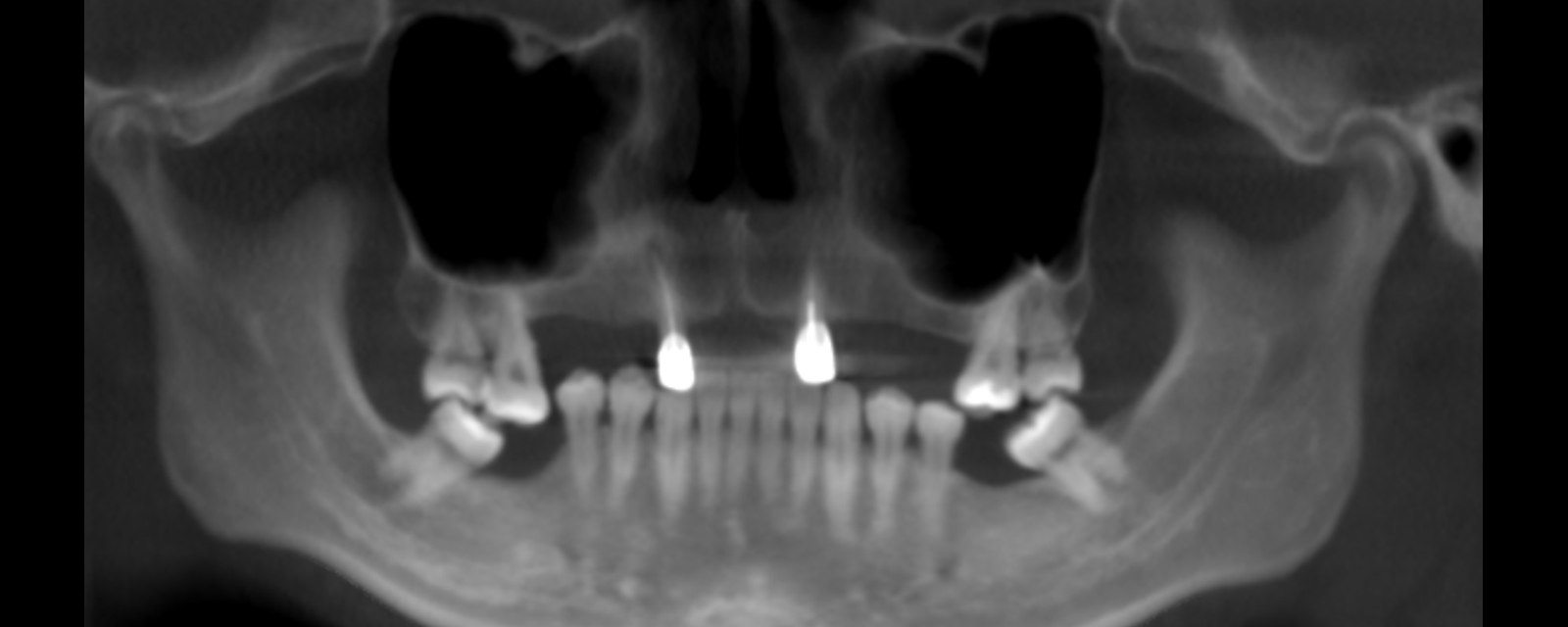
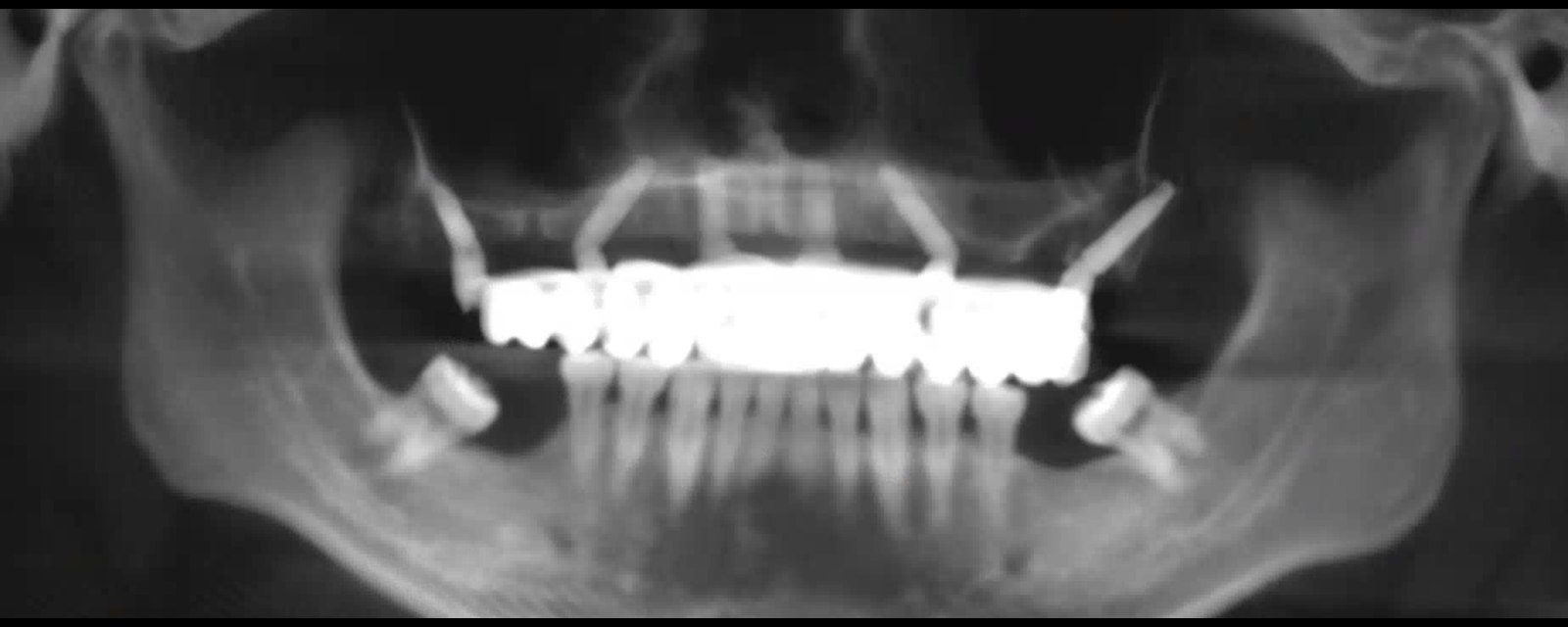
Pterygoid anchorage · upper arch
Terminal upper dentition, lower teeth worth keeping
The remaining upper teeth could not be saved. Rather than sinus surgery, the upper arch was converted to a fixed full-arch prosthesis on two pterygoid implants and four anterior implants. The lower teeth were sound and stayed.
Before
After
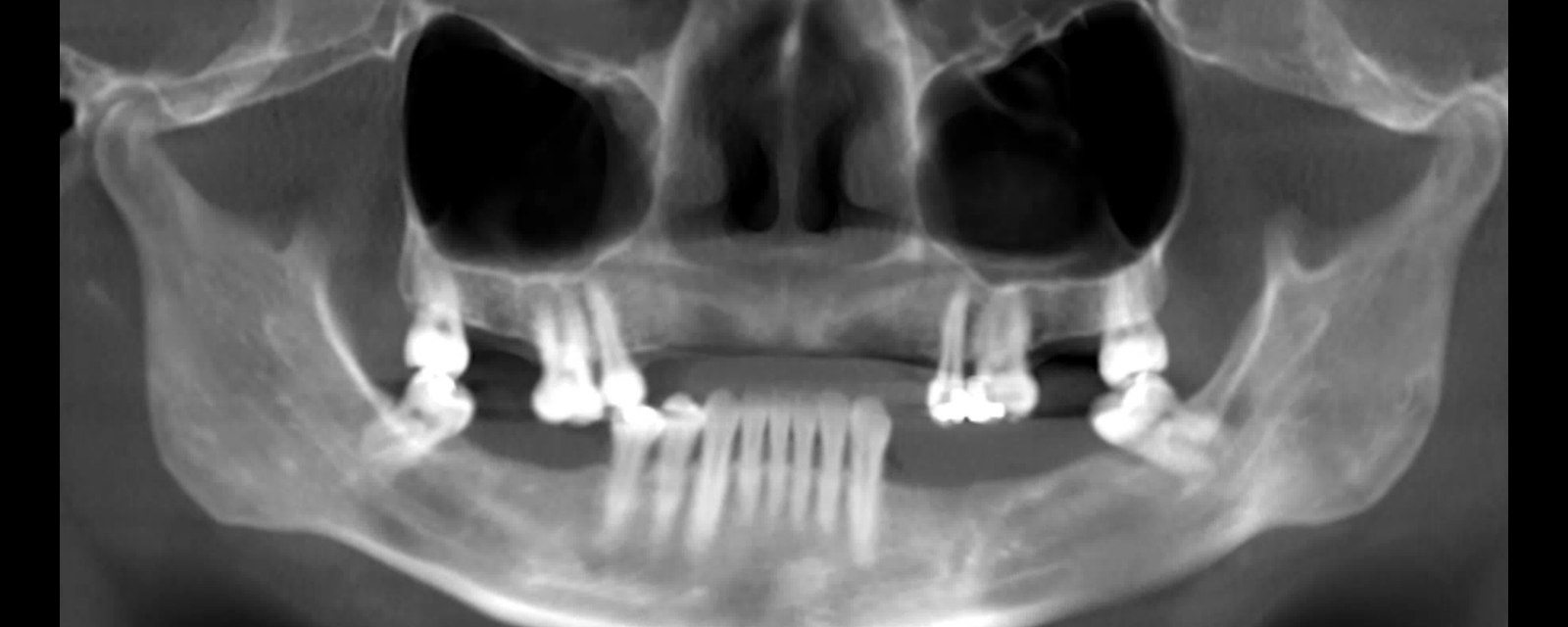
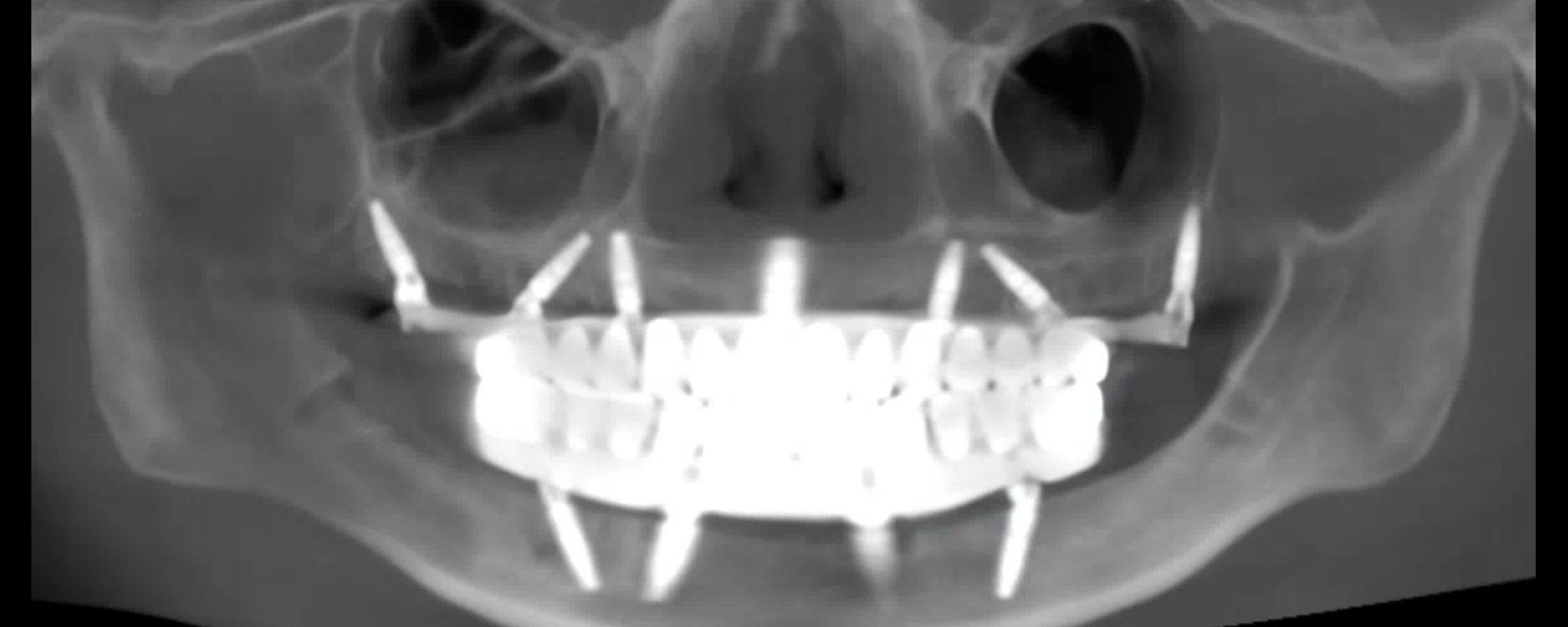
Full mouth · pterygoid and conventional
A handful of teeth left, sinuses down to the ridge
Extractions and implants in both arches in one surgical visit. Pterygoid implants support the back of the upper arch, with conventional implants in front. Lower arch on four implants. Fixed provisionals within 24 hours, with finals by the referring dentist after integration.
Before
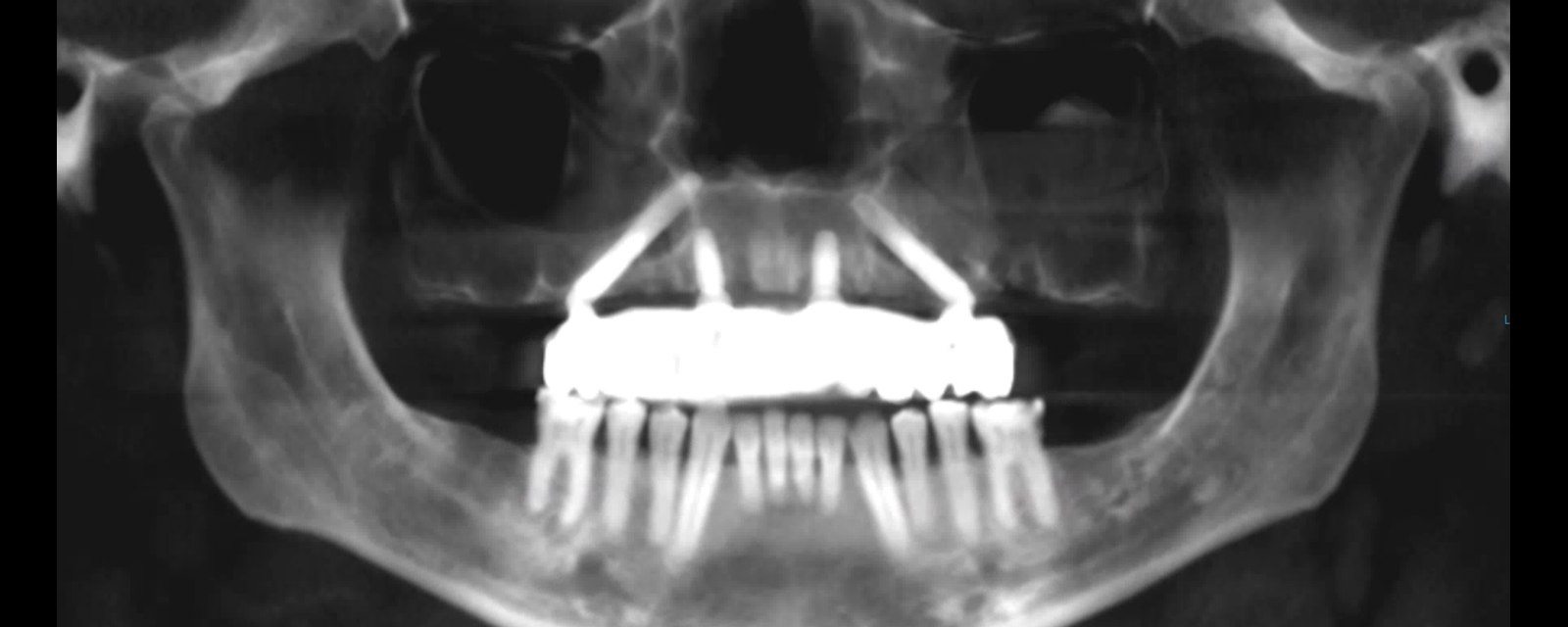
After
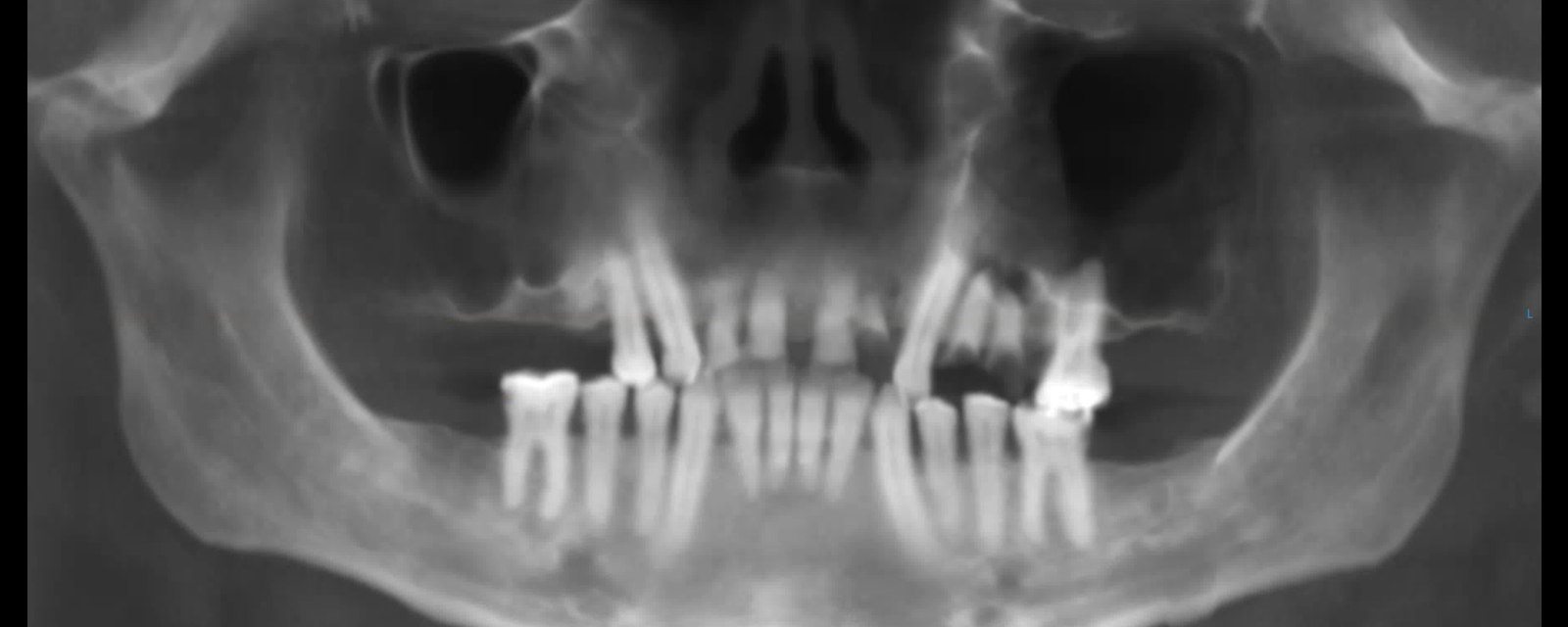
Upper arch · trans-sinus implants
Hopeless upper teeth, sinuses sitting on the ridge
Too little bone below the sinuses for conventional posterior implants. Two tilted implants were passed through the sinus to anchor in the dense bone beside the nose, with two anterior implants. Lower teeth kept. Fixed upper provisional within 24 hours.
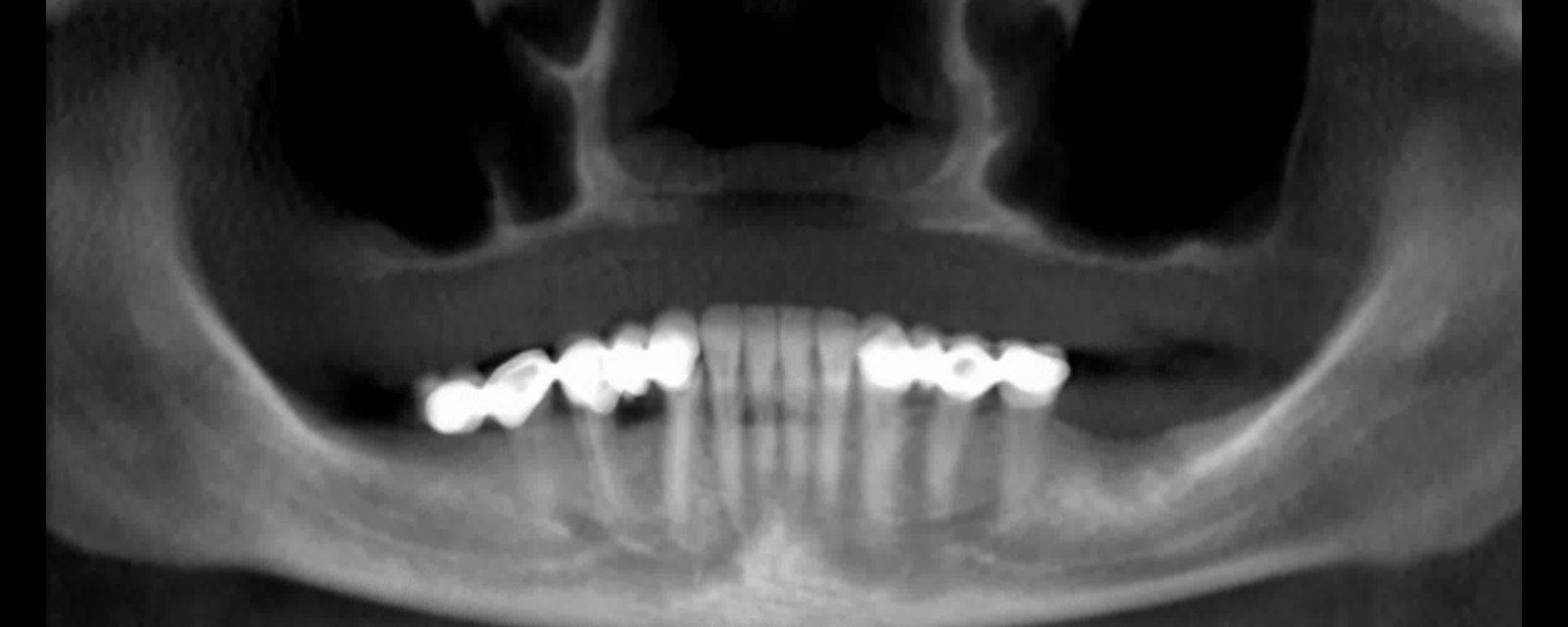
Before
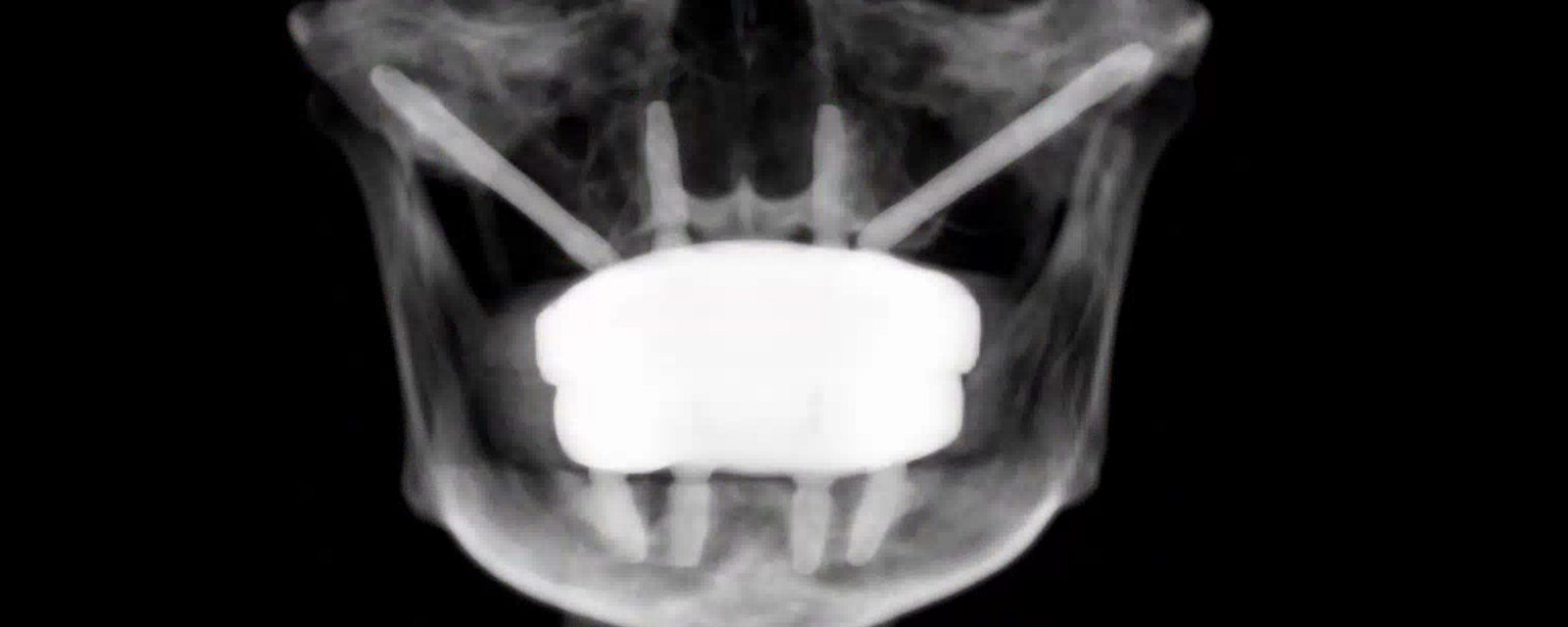
After · 3D
Zygomatic · transnasal
No posterior maxilla at all
Two zygomatic implants anchored in the cheekbones support the back of the arch. In front, two long transnasal implants run along the side wall of the nose to reach denser bone. Fixed upper arch, with the lower arch on four implants.
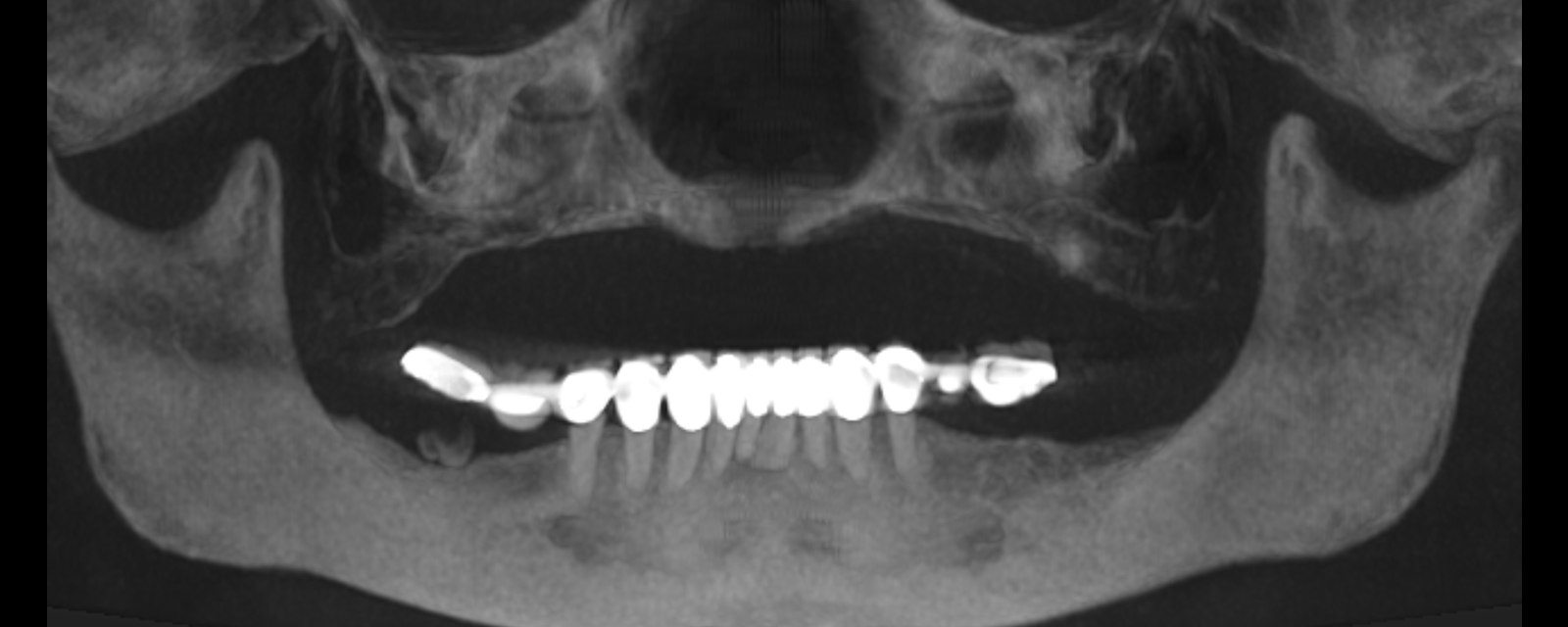
Before
After · 3D
Quad zygoma · pterygoid
When there is no alveolar bone at all
A severely resorbed upper jaw with nothing left to hold a conventional implant. Four zygomatic implants and two pterygoid implants carry a fixed upper prosthesis, six implants in all. Lower arch on four implants.
Images are de-identified CBCT reconstructions of patients treated by Dr. Mirdamadi. Every case is different; the plan depends on the scan, the medical history and the prosthetic design.
Before the first case
What your office needs for a surgical day.
This is the whole list. If something is missing, we talk about it on the call and usually solve it before the first patient.
Operatory
A standard chair with working high-volume suction and room for a second instrument cart.
Oxygen and monitoring
Oxygen on site. I bring the sedation monitor, airway kit and emergency drugs.
Recovery space
A quiet room or second chair where the patient can recover with an escort.
Sterilization
Your normal sterilization flow; our surgical kits arrive sterile and leave with us.
Imaging
A CBCT on site is helpful, not required. We can arrange one before the planning call.
Team
One assistant from your practice who knows the room, plus my surgical assistant.
Lab
Your lab of choice for the provisional and final; we coordinate the conversion with them.
Paperwork
A collaboration agreement and the patient's consent forms, which I provide.
Other referrals
Not every case is a full arch.
Single and multiple implants planned to your restorative design, wisdom teeth and complex extractions you would rather not keep in-house, bone grafting, pathology and second opinions all go through the same door. Use the referral form and attach what you have; records follow securely.
• Implant referrals: I place to your crown position and send the scan body scan or impression you prefer
• Wisdom teeth and extractions: IV sedation at Roya, same-week appointments for patients in pain
• Second opinions: a fresh look at a plan, with the CBCT read and a written note back to you
Common questions from dentists
Before you send the first case.
Who does the patient belong to?
You. The patient stays registered with your practice, you keep the restorative fees and the relationship, and I bill only the surgical phase. Nothing is marketed to your patient by Roya.
What if my office has never hosted surgery?
That is the most common starting point. Before the first case we visit or video-call to look at the operatory, sterilization and recovery space, and your team gets a one-page checklist for the day.
Which implant systems do you use?
Tell me what your lab and your restorative workflow prefer and we plan around it. If you have no preference, I will suggest a system with the components your lab already stocks.
What counts as a complex case?
Anything you would rather not start in-house: severe maxillary atrophy, failed implants and the bone loss around them, cases needing zygomatic or pterygoid anchorage, sinus and block grafting, pathology, and patients with a medical history that calls for an anesthesia plan. Send the CBCT and I will tell you on the planning call whether it can be done in your office or belongs at Roya.
Can you teach me to do these cases myself?
Yes. For surgeons and implant dentists who want to add zygomatic, pterygoid or full-arch surgery to their own practice, I come to your office and mentor you through real cases: we plan together, you operate, I guide each step chairside, and I stay available for the follow-ups. Ask on the contact page and we will talk about which cases suit a first mentored day.
How far do you travel?
Across San Diego County for scheduled surgical days. For offices further out we group cases into a day, or the surgery happens at Roya and the restorative phase stays with you.
How do we send the CBCT?
Through a secure upload link that you receive after the planning call. Your imaging software's DICOM export is all we need. Please do not email records.
Start here
Have a case in mind?
The questionnaire takes about a minute and gives me what I need for the planning call. No patient identifiers.
Roya Oral Surgery
511 Encinitas Blvd, Suite 118, Encinitas, CA 92024
royaoralsurgery.com →